Professional sanitation and food safety professionals in Brampton support restaurants, food centers, bakeries, warehouses, and mobile food services staying compliant. They sanitize regularly touched surfaces, food preparation surfaces, equipment, floors, drains, restrooms, and food handling spaces with approved chemicals, maintaining proper ratios, and documenting contact times. You need scheduled cleaning determined by risk, volume, food allergies, and regulatory assessments, plus documented proof backing HACCP, audits, and public health compliance. The sections below outlines what strong sanitation programs must contain.
Main Points
- Sanitation experts from Brampton support restaurants, grocery departments, commissaries, warehouses, bakeries, schools, mobile vendors, and allergen-sensitive operations.
- Compartmentalized approaches treat high-touch surfaces, food-contact equipment, kitchens, floors, drains, restrooms, and storage areas for eliminating cross-contamination.
- Approved sanitizer dilution, compatibility, and exposure duration are checked by qualified contractors, with conclusion recorded via checks, audits, and remedial documentation.
- Cleaning timelines ought to comply with danger, production volume, changeovers, releases, and requirements, with everyday, regular, and periodic tasks allocated by area.
- Pick contractors with hazard analysis knowledge, health regulatory, understanding, safety training, training, protection, endorsements, color-coded instruments, and compliance-ready hygiene paperwork.
Which Brampton Facilities Need Food Safety Cleaning?
You must maintain food safety cleaning if your business is subject to public health review, food regulations, or HACCP systems. This covers restaurants, cafeterias, commissaries, grocery food departments, butcher shops, seafood counters, convenience stores, and institutional kitchens.
Adherent hygiene cleaning is also needed in warehouses, food manufacturing plants, cold storage sites, retail bakeries, school nutrition programs, banquet halls, and meal delivery hubs. Portable and seasonal operations matter too, such as catering vehicles, festival sellers, and pop-up stands. Your facility must have written cleaning standards should your staff prepare supplies, portion completed foods, reheat products, or manage allergen records. In Brampton, food safety continues to be not optional; it comprises lawful, operational, and customer protection adherence.
What Services Do Brampton Cleaning Experts Provide?
You need professional cleaners who sanitize high-touch surfaces, kitchens, floors, and restrooms to meet food safety and public health standards. They target these areas because they pose the greatest danger for cross-contamination, slipping risks, and sanitation breaches.
If you comprehend their cleaning services, you'll be able to confirm your operation satisfies required operational and regulatory standards.
Disinfecting High-Touch Surfaces
assign how frequently each area is sterilized
ensure proper sterilization
Kitchen Areas, Floor Surfaces, and Bathroom Spaces
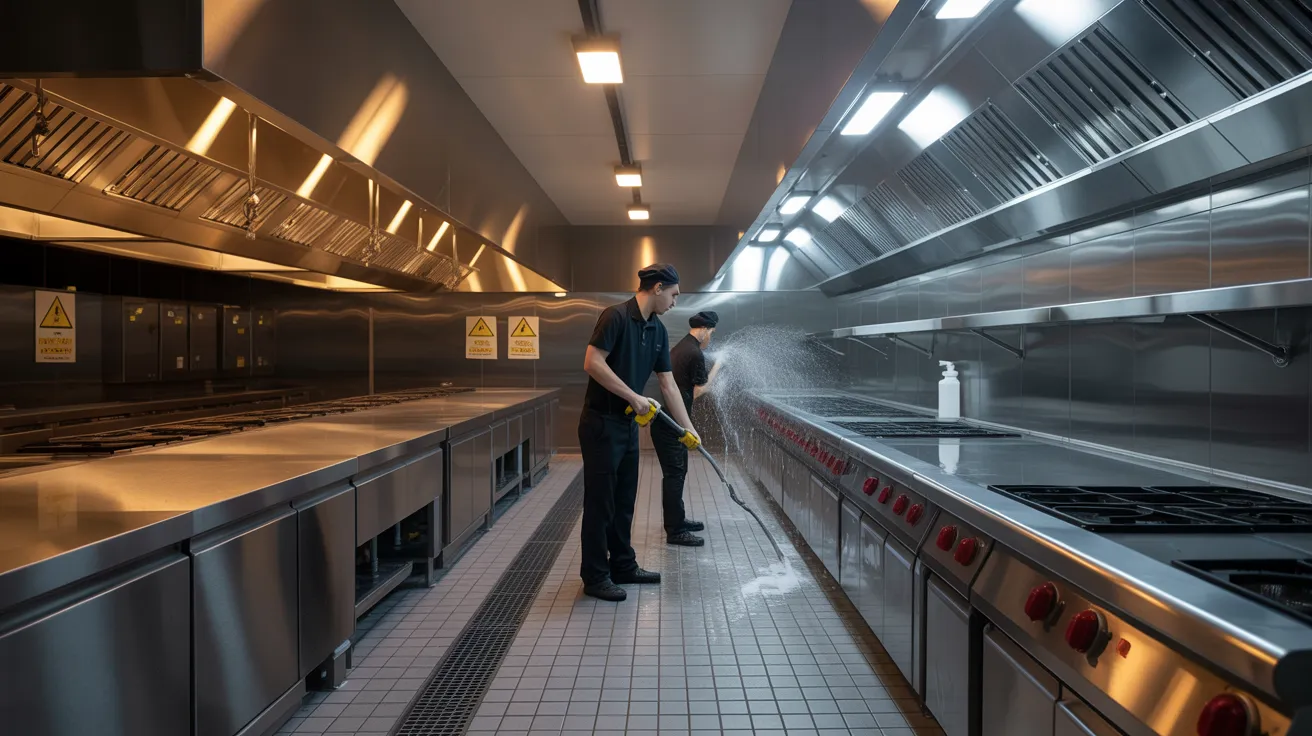
Brampton cleaning professionals will handle kitchens, floors, and restrooms since each space presents separate hygiene concerns, injury, and community health challenges. In industrial kitchens, you need grease removal from cooking stations, appliance surfaces, drain systems, preparation areas, and backsplashes to reduce contamination and pest pressure.
Professional floor upkeep with documentation is also included. is likewise provided as part of the service.
Restroom cleaning requires disinfecting touch areas, bathroom equipment, stall barriers, supply stations, and bins, replacing items and managing smells. They also service restaurant moprooms, where chemical storage, sink hygiene, and drainage conditions can affect sanitation compliance and staff safety daily.
Why Food Safety Cleaning Matters in Brampton
Brampton businesses need to implement food-safe cleaning standards for meeting legal standards and obtaining approval. You also reduce cross-contamination by cleaning and sanitizing food-contact surfaces, equipment, and high-touch areas correctly. Most importantly, you safeguard community wellness by reducing the chance of food poisoning in your establishment.
Health Code Compliance
Food companies in Brampton face strict public health standards, making food safety cleaning essential to fulfilling health code requirements, defending patrons, and sidestepping enforcement action. You must maintain clean food preparation areas, written maintenance records, proper chemical use, and verifiable staff procedures that correspond to municipal and provincial inspection expectations.
Thorough sanitation facilitates cross-contamination prevention by decreasing particles on mutual appliances and regularly touched locations.
Cross-Contamination Prevention
Following health code standards depends on your skill in stopping cross-contamination in daily food handling and cleaning. You should isolate raw items from prepared foods, sanitize prep surfaces between tasks, and store chemicals away from food-contact items. Well-defined guidelines decrease contamination chances and support consistent compliance during inspections.
Building allergen isolation prevents key allergens from reaching shared surfaces, containers, or equipment. Utilize dedicated cutting boards, color-coded tools, and precise instrument labeling so team members won't blend products in cooking or serving.Enforce handwashing after handling uncooked meats, shellfish, egg items, or allergen substances. Swap wiping cloths regularly, and confirm sanitizer strength with test strips. When your team follows these practices every shift, you foster a cleaner, more secure operation that meets Brampton's food safety expectations daily.
Community Health Assurance
When food safety cleaning breaks down, you don't just risk a failed inspection—you increase the chance of foodborne illness affecting customers, staff, and the wider Brampton community. You also undermine your responsibility in protecting public health, especially in high-traffic food premises where contamination can spread quickly through surfaces, equipment, and touchpoints.
You need sanitation systems that eliminate soils, sanitize effectively, and validate outcomes. This involves maintaining exposure durations, selecting approved disinfectants, documenting procedures, and coaching employees to meet health-unit expectations. These measures prevent pathogen control by decreasing microbial counts before contaminating food or hands. Throughout Brampton, strong cleaning safeguards susceptible populations, minimizes disease potential, and demonstrates your diligence. When you adhere to standards, you go beyond requirements—you lower hazards and facilitate secure food handling region-wide.
In What Ways Does Cleaning Help Achieve Food Safety Compliance?
Maintaining rigorous cleaning routines supports food safety compliance by lowering contamination exposure, managing pathogen expansion, and keeping your facility aligned with sanitation requirements under HACCP-based programs and public health regulations. You validate that food-contact surfaces stay visibly clean and microbiologically controlled, enabling documented preventive controls and inspection readiness.
Cleaning initiatives additionally upgrade allergen mitigation by clearing residues that can provoke undeclared allergen exposure.
When Ought You Plan Commercial Cleaning?
Plans for cleaning are most successful when created based on risk assessment, output volume, and compliance standards instead of just a fixed calendar.
Handling occasional tasks distinctly allows for improved scheduling.
Selecting the Right Brampton Cleaning Experts: Key Considerations
Start by screening providers against food-safe sanitation requirements, not cost only. You should verify that each company understands CFIA, public health, and HACCP compliance standards relevant to your facility. Ask for proof of insurance, WHMIS compliance, documented staff training, and supervision practices. Review whether technicians understand contamination prevention, chemical handling, and traceable sanitation records.
You should further examine service consistency and answerability. Request testimonials from Brampton food businesses, then review response times, corrective action plans, and communication protocols. Validate the company facilitates supplier audits and can present inspection-ready documentation to regulators or external parties. Confirm equipment receives maintenance, color-coded implements are used appropriately, and facility-specific risks are identified. A experienced service protects compliance, product integrity, and your brand reputation.
Which elements are part of a Food Safety Cleaning Plan?
Create a documented plan that clarifies every sanitation task, standard, and responsibility prior to production start. You should detail cleaning frequencies, approved chemicals, dilution rates, contact times, tools, and verification methods for each location, surface, and apparatus. Include pre-operational inspections, corrective actions, and employee training requirements.
Your plan should also include cross-contamination controls, waste handling, pest-prevention measures, and documented schedules for restrooms, drains, floors, and food-contact areas. Clarify how you'll distinguish raw from ready-to-eat operations, support ingredient tracking, and copyright accurate allergen labeling through validated cleaning between product changes. You should define accountability, maintain signed records, and review results against regulatory standards, HACCP controls, and customer requirements. When gaps appear, adjust procedures immediately and retrain staff.
Commonly Asked Questions
Are sanitation providers offered for overnight shifts in Brampton properties?
Yes, you can book sanitation coverage to support overnight shifts in Brampton facilities. You'll coordinate nighttime cleaning around production schedules, access requirements, and personnel needs. Services typically establish nighttime procedures to reduce interruption, stay compliant, and record finished tasks. You should confirm arrival schedules, supervision, access procedures, and waste management before starting service.
Can Brampton cleaning experts handle hazardous incidents?
Yes, you can find Brampton cleaning experts to provide hazard containment services. They handle hazard containment, assess risks, contain contamination, and begin swift cleanup to reduce exposure and operational disruption. You should confirm their response times, training certifications, PPE protocols, and disposal procedures. If your facility must meet health or food safety regulations, choose a provider that documents incidents, maintains regulatory procedures, and supports audit readiness.
Can eco-friendly disinfectants be used safely on surfaces contacting food?
Absolutely, plant-based sanitizers prove to be secure for food-handling equipment when you pick products labeled food safe and satisfying regulatory requirements. You must validate contact times, mixing proportions, and rinse procedures in advance of use. Botanical formulations decrease harsh chemical exposure, though you still need evidence of effectiveness against harmful bacteria. For keeping surfaces residue-free, adhere to manufacturer directions precisely and ensure the sanitizer complies with food sanitation requirements.
Can maintenance plans flex with seasonal shifts?
Without question, cleaning plans customize readily for seasonal production changes. Adjust timing, staff levels, chemicals, and verification steps to align with production rhythms while sustaining regulatory adherence. Reduce operational delays by organizing sanitation amid equipment transitions, peak seasons, and usage patterns. Also update standard operating procedures, staff education, and environmental testing to address temporary risks, emerging allergens, or elevated soil levels. Ongoing evaluations preserve your plan effective.
Are professional cleaning companies offering employee instruction on sanitation best practices?
Certainly, commercial cleaners coach your staff on sanitation best practices. You secure employee development on proper chemical use, processing times, cross-contamination prevention, machine disassembly, and documentation procedures. They generally coordinate instruction with HACCP, GMP, and CFIA or regional health bodies standards. Many also run health assessments to verify compliance, identify gaps, and strengthen corrective measures. This helps similar article you maintain consistent procedures, satisfy audits, and reduce food safety risks daily.
Final Thoughts
Through engaging Brampton commercial cleaning and food safety specialists, you do far more than tidy—you ensure your facility for inspections and your procedures stay aligned with regulations. From kitchen spaces to processing areas, all maintained surfaces and organized zones reduce contamination risks and prevent significant costs. Through scheduling maintenance at proper intervals and adhering to a comprehensive cleaning program, you ensure protection for your team, clients, and your good name. In a tightly controlled regulatory landscape, clean conditions must be a priority—they represent good business practice.